
What are Yedabila habitat pods?
Many small animals lose their natural shelter after floods and fires when native plants are damaged. This leaves them exposed and at risk from predators. Our Yedabila habitat pods act like small temporary homes where animals can hide and stay safe after natural disasters. The pods are fully biodegradable, so as plants grow back, they naturally break down and disappear.
We teach community volunteers how to make Yedabila habitat pods using traditional Indigenous weaving techniques (“Yedabila” means animal in Yorta Yorta). While weaving, we share our knowledge about local wildlife and celebrate Aboriginal culture and heritage.
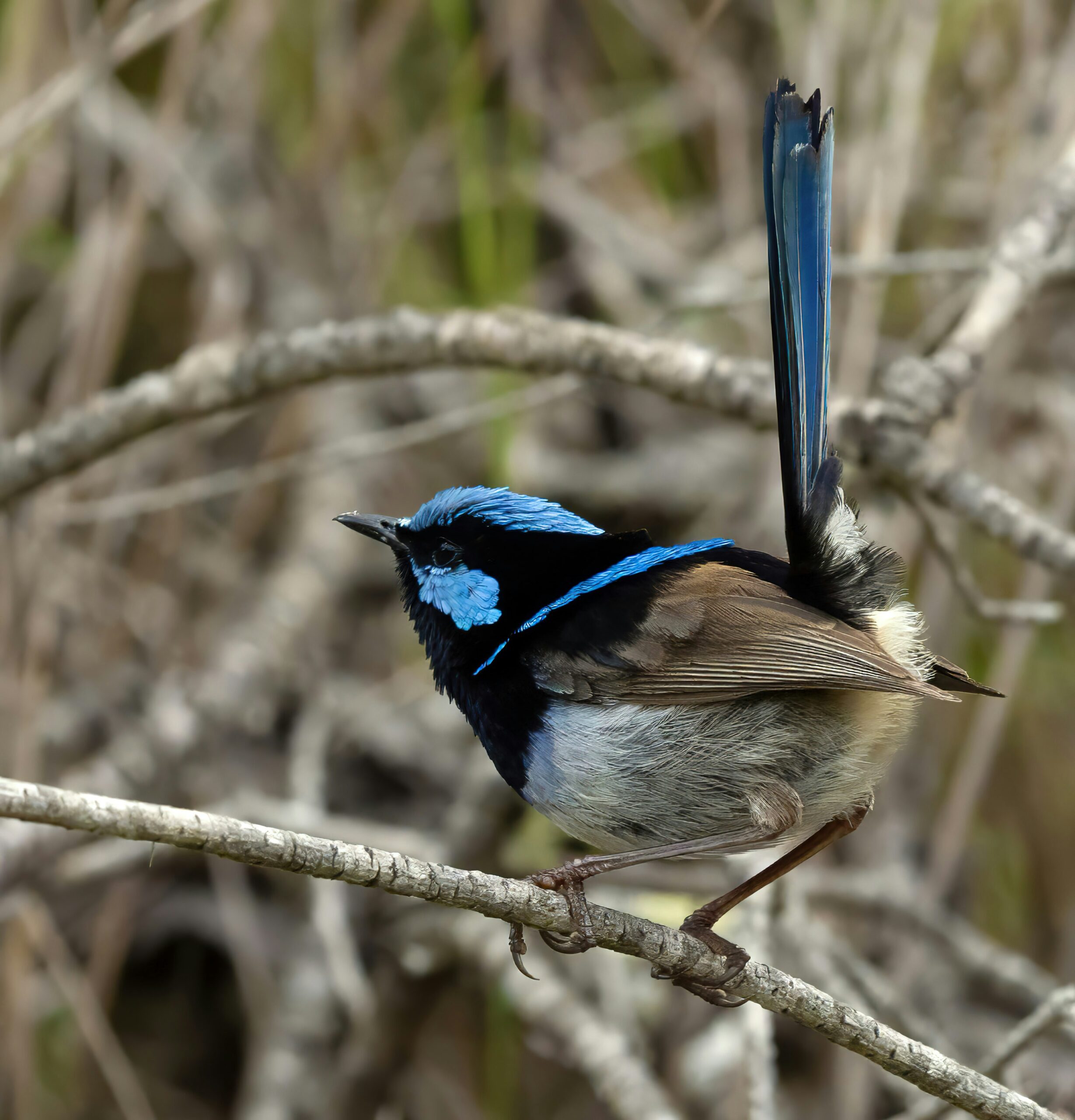
We have a Dreaming story about waatji pulyeri, a blue, powerful messenger. It means ‘little one of a lignum bush’, which is also what the superb fairy-wren’s Indigenous name is. They love to nest in that tangly sort of mess. And that’s what our pods are -nesting boxes for superb fairy wrens in urban areas where they don’t have tangled lignum.”
Kai Lane, pod designer, Traditional Owner representative and Eco Warriors Australia Vice President. Source: Garland Magazine.
Waatji pulyeri (superb fairy wren), or “little one of the lignum bush”, are story carriers and symbols of good luck. Sightings of waatji pulyeri in Melbourne have nearly halved over the past ten years, largely due to habitat fragmentation, urban infill and loss of dense native vegetation.
Our Yedabila habitat pods provide new habitat for wildlife such as waatji pulyeri in urban areas. Community members learn traditional skills and understand the cultural history of native plants and wildlife. Volunteers work together to make real habitat that help care for Country. Our sessions create a hands‑on, fun space where people can connect, learn and contribute to caring for Country.